
Nvidia Teases Rubin HPC GPU: 50,000+ CUDA Cores, Ships 2028
TL;DR
- Nvidia withheld FP64, memory bandwidth, and power specs for Rubin HPC, the exact metrics national labs use to score procurement contracts.
- The Vera CPU rack (192-CPU, ~300TB memory, 1PB storage) arrives in early 2027, a full year before Rubin HPC ships.
- Top supercomputers achieve only 3% of theoretical peak on sparse HPCG workloads, the benchmark most relevant to Rubin HPC's target use cases.
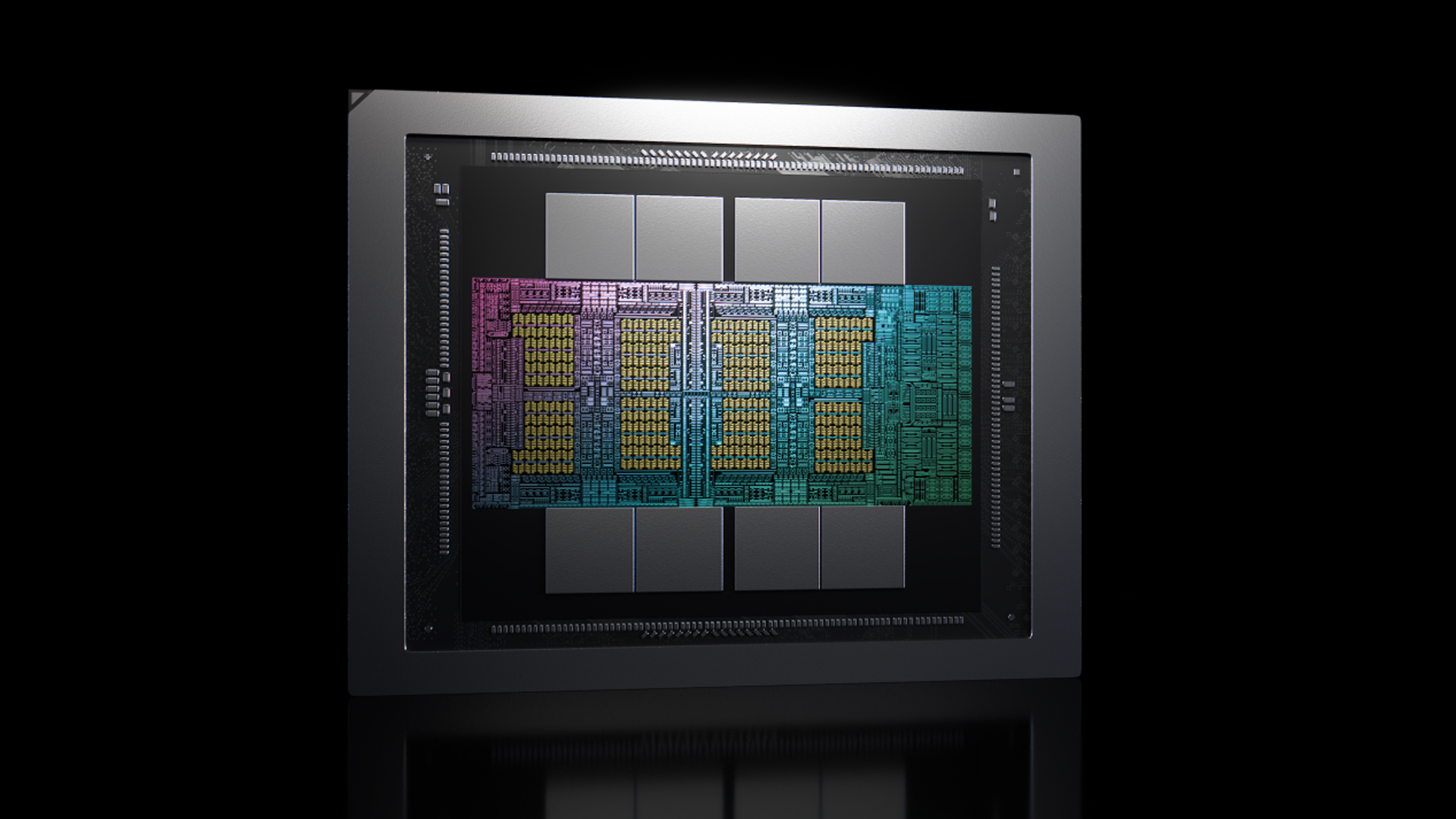
Nvidia used Supercomputing 2026 to tee up a Rubin HPC GPU with 'more than 50,000' CUDA cores, a chip the company says will 'accelerate agentic workflows and simulation for scientists, engineers, and analysts working with large data sets.' The current Rubin tops out at 28,672 CUDA cores.
Tom's Hardware reports Nvidia is framing the part as a 'balanced design,' pairing more compute with faster node-to-node data movement over NVLink 7. The interconnect retains the 3.6 TB/s of per-GPU bandwidth already shipping on NVLink 6, and the piece says the Rubin HPC design likely reuses a four-die layout similar to Rubin Ultra, linked by NVLink-C2C.
Nvidia disclosed little else. HBM capacity, memory bandwidth and native FP64 numbers, the figure traditional HPC buyers scrutinize most, are all missing from the announcement, and Tom's Hardware notes competitors are promoting exactly those metrics at the same conference. It is one more roadmap tease across the 288 Nvidia stories we have tracked over the past 90 days where headline core counts arrive long before the specs HPC buyers actually procure on.
Nvidia says Rubin HPC will arrive sometime in 2028, leaving two procurement cycles between the tease and the silicon.
What others are reporting
-
StorageReview Read →
Most complete SC26 roundup: Vera CPU rack specs (192-CPU, 300TB memory), TCBP-JOBS quantum decoder cutting design time from 12 weeks to 45 minutes, and Slurm 26.11 quantum-HPC scheduling.
"Faster simulation means faster discovery." — Ian Buck, VP of Hyperscale and HPC, NVIDIA
-
SiliconAngle Read →
Covers CUDA-X library additions: cuPhoton.xBeam cuts Event Horizon Telescope analysis from one month to 8 minutes; IBM-Fermilab quantum codesign partnership detailed.
"Rubin HPC accelerates the simulations agents use to test ideas and guide their next steps, helping scientists and engineers explore more possibilities."
-
TechTimes Read →
Flags the HPCG benchmark showing top machines hit only 3% of theoretical peak on sparse workloads, questioning whether the core count will translate to real gains without published bandwidth specs.
-
Techstrong.ai Read →
Details Nemotron for Science as a deployable agentic toolkit; KTH Royal Institute autonomously repaired 81% of faulty molecular dynamics simulations overnight using it.
"Nemotron for Science includes Nvidia's Nemotron 3.5 Super VL open model and the LitmusBench v0.2 dataset."
Originally reported by tomshardware.com
Read the original article →Original headline: Nvidia Unveils Rubin HPC GPU With Over 50,000 CUDA Cores at SC26, Shipping 2028