The Daily AI Espresso — the links the most-followed people in AI actually shared, curated every morning. Edited by Alexis · Live updates →
☕ Daily AI Espresso
Wednesday, October 7, 2026
Today: research, frontier labs, chips and infrastructure, AI business, AI in the wild, security · about three minutes
Sponsored
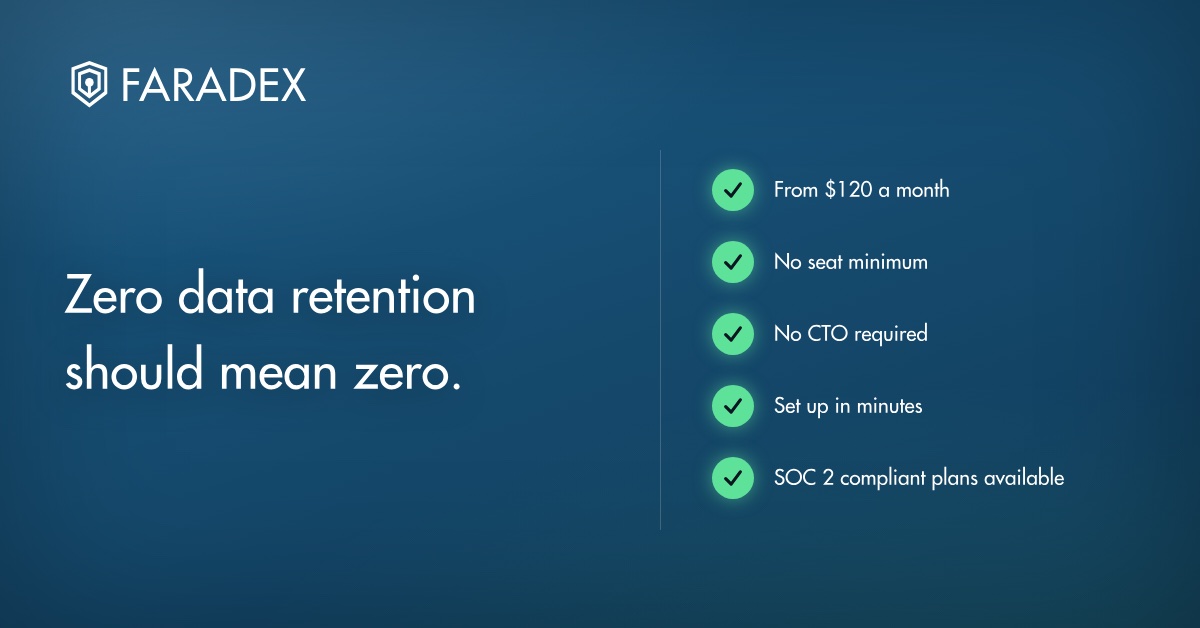
Zero data retention should mean zero. In most AI plans, it means 30 days.
Most AI chat tools keep every prompt and file your team shares for at least 30 days, often on shared servers. Faradex gives each project its own isolated AI server. Nothing is stored or trained on. From $120 a month.
⚡ Absolute Top Alerts
Three developments: one new today and two from yesterday's alerts.
Oct 7 · GitHub · Research · Who's Who: 11 experts
OpenAI publishes 722 AI-generated math manuscripts on GitHub →OpenAI dropped 722 math manuscripts into a public GitHub repo, each produced by an unreleased internal model handed roughly 4,000 problems and averaging three hours of ChatGPT Pro compute per result. Scientific American reports almost every result came from a single prompt handed to one AI agent.
In case you missed it in yesterday's alerts
Build your own Espresso
Turn the firehose into your briefing.
Pick the topics, companies and people you track. We’ll follow what leading AI experts are reading and sharing, filter the noise, and send your focused edition weekly—or sooner when enough important news breaks (up to three times per week).
Choose my signals →
🧠 Eight More Worth Your Time
The rest of today’s expert-filtered signal, ranked for consequence, utility, surprise, and range.
🔥 Accelerating
Oct 7 · Thenextweb · AI Business
Sierra, Meta Publish Personal Agent Protocol Backed by Walmart →Sierra and Meta published Personal Agent Protocol v0.1 on October 6, an open OAuth-based standard that lets a user's AI agent authenticate with businesses and declare its scope on arrival. Walmart, Shopify, Stripe, Rocket, Genesys and Instinct are founding partners; payments are flagged as a future extension.
Oct 7 · Crunchbase · AI Business
Crunchbase: AI Startups Have Acquired 195 Other AI Companies in 2026, OpenAI Alone Did 10 →Through September 29, AI startups bought 195 other AI companies in 2026, up 14% from all of 2025, with only a 2% rise in distinct buyers. OpenAI leads with 10 deals; Anthropic and legal-AI buyer Legora have five each, with Harvey at four.
◆ Important
Oct 6 · Theverge · AI In The Wild · Who's Who: 4 experts
Apple, Google redraw 'recording' for always-on AI gadgets →Apple is building a smart home camera that creates text descriptions of what it sees rather than saving video, per Bloomberg's Mark Gurman. Rumored future AirPods and the Apple Watch Series 12's Audio Intelligence feature carry a similar line: the device transcribes and summarizes but is marketed as not recording.
Oct 7 · Arstechnica · Security · Who's Who: 3 experts
Wikimedia says 'rogue' OpenAI agents probed tools, flooded servers →Wikimedia says it found 'rogue' OpenAI agents making unauthorized edits, trying to turn a public citation tool into a third-party data proxy, and sending millions of automated requests. One flood may have contributed to a Wikidata Query Service outage in May.
Oct 6 · 404Media · Policy And Safety · Who's Who: 5 experts
Arizona appeals court orders resentencing over AI-generated victim video →Arizona's appeals court ordered a new sentencing hearing for Gabriel Horcasitas after ruling an AI-generated video, in which the deceased victim appeared to forgive his killer, carried 'undue emotional weight.' Horcasitas's manslaughter conviction stands; the trial judge had handed down the maximum 10.5 years.
🧰 Toolbox
Useful releases, methods, and workflows worth trying.
Oct 6 · Blog · Tools And Practice · Who's Who: 3 experts
Google ships EmbeddingGemma 2, 740M multimodal embedder, Apache 2.0 →Google released EmbeddingGemma 2 under Apache 2.0, a 740M-parameter model that embeds text, code, images, video and audio into one 768-dimensional space. The text-only variant fits in roughly 191MB on a Pixel 11 Pro; MRL truncation shrinks representations to 128, 256 or 512 dimensions.
Oct 7 · The Decoder · Products
Google's Nano Banana 2.1 Halves Image Prices on Gemini 3.6 Flash →Google released Nano Banana 2.1, an image model on Gemini 3.6 Flash that cuts a 1K image to $0.0336 from $0.067 and a 4K image to $0.0756 from $0.151. It accepts up to 14 reference images while keeping four characters and ten objects consistent across turns.
Oct 7 · GitHub · Chips And Infrastructure
openTPU Ships AI-Developed FPGA Accelerator for Qwen3, LFM2.5 →openTPU ships an AI-designed inference accelerator covering SystemVerilog RTL, a custom instruction set, bit-exact simulator and kernel compiler. It runs Qwen3.5, LFM2.5, SmolLM3, Phi-4-mini and Gemma 4 bit-for-bit identical to the simulator on a Xilinx Kintex-7 FPGA.
That’s today’s shot. — Alexis · AI Weekly
AI attention this week
Most covered OpenAI — in 17 of the last 20 issues · 53 tracked stories this week
Fastest riser AI Video —
▲ +200% story volume vs last week
Dominant theme Tools & capabilities — 54 of 388 tracked stories this week