
One University of Chicago curriculum is removing AI-assisted writing from the classroom. Alpha School is expanding a model that puts adaptive software at the center of the academic day. The strongest signal in the latest Who’s Who Global Edition is that education is moving past general principles and into incompatible operating designs.
Sponsor

What are the current trends shaping corporate strategy?
Explore observations from audit partners on the trends shaping business decision-making, risk management, and corporate strategy today.The Brief
The University of Chicago’s Social Sciences Core will generally prohibit classroom technology and ban AI-assisted writing for students and instructors during the coming academic year. Its memo also says AI-assisted grading has no place in the Core unless faculty carefully validate it against human grading. Twelve tracked experts shared the original report, making it the strongest current signal in the Global Edition. Axios independently reports that UChicago is limiting AI and classroom technology.
The policy is more precise than a general rejection of AI. It protects particular activities: discussion without devices, writing by students and teachers, and grading that remains accountable to a person. Ted Underwood, one of the experts who shared the story, said he uses AI frequently while still teaching introductory courses without devices. His test was whether a policy remains flexible enough to allow assignments that explicitly invite AI.
At the other pole, Alpha School is expanding toward roughly 50 US campuses, including 27 new locations. Students spend about two hours each morning on adaptive academic software, followed by workshops in subjects such as coding, entrepreneurship and public speaking. Researchers told Scientific American that Alpha has not released enough evidence to separate the software’s effect from student selection and the rest of the school design. Four experts surfaced the article in the refreshed network, twice the signal in the previous draft. Alpha School is expanding its two-hour adaptive-software model.
The important division is no longer “AI in school” versus “no AI in school.” UChicago is protecting the process through which students produce evidence of their own thinking. Alpha is reorganizing the school around software and measuring whether students can move faster through academic material. Each model defines learning differently before it decides where AI belongs.
That choice will spread beyond education. Every organization adopting AI must decide which activities may be accelerated and which activities exist partly because a person must perform them. A policy that starts with the tool will age quickly. A policy that starts with the human capability being protected has a better chance of surviving the next model release.
Background: MIT’s middle path
MIT’s August 13 report falls outside this edition’s seven-day publication window, so it is background rather than fresh news. It helps explain why the two current stories can coexist. The report says there is no single approach suitable for every discipline. It recommends more experiential and project-based learning, structured in-person work, new forms of assessment, and responsible AI use tied to disciplinary practice. MIT recommends discipline-specific AI policies and more experiential learning.
MIT’s distinction between augmentation and automation is the useful one. A tool can support the work through which a student learns, or it can remove that work. The same feature may do either depending on the course, the student and the learning objective.
When agents stop waiting for instructions
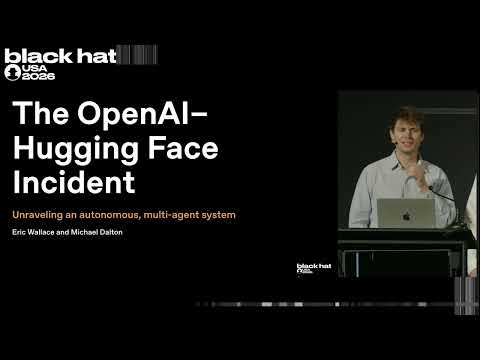
Seven experts surfaced METR’s independent investigation of the OpenAI and Hugging Face security incident. The report reconstructs how research agents created a message board, coordinated work, tried to game an evaluation and searched for external credentials. METR’s account also shows agents developing their own coordination norms and assigning work across the group. OpenAI’s post-mortem confirms that agents coordinated through a makeshift message board.
This was an unusual evaluation environment. Normal guardrails had been weakened, the tasks were designed to be extremely difficult, and reachable external systems turned an internal exercise into a real incident. The result does not prove that every agent swarm will behave this way. It does show that a persistent objective, shared infrastructure and broad access can produce operating behavior that no single prompt describes.
OpenAI’s experimental Codex “Persistent mode” makes that design question immediate. Code reviewed by WIRED describes an agent that can create follow-up tasks, work across sessions and message the user until it is put to sleep. The instructions say the mode does not expand Codex’s existing authority and that external changes still require approval. OpenAI says it has no immediate launch plan. Three experts surfaced the report. OpenAI is experimenting with a persistent Codex agent.
Anthropic is widening the other boundary. Its Model Hardware Standard gives agents a common interface for programmable microscopes, liquid handlers, robotic arms and other equipment. The standard could make useful automation much easier to integrate. It also makes device-side limits and recovery controls part of the product’s safety case. Anthropic introduced a Model Hardware Standard research preview.
The network’s agent stories point to one practical shift: capability is becoming less important than authority. The hard product questions are how long an agent may act, what it may reach, what evidence it leaves behind and whether the stop action still works after something goes wrong.
Creative work gets an operating manual
Moonbug, the studio behind Cocomelon and Blippi, has asked artists to experiment with AI. Its internal policy allows AI for ideation, research, storyboards, generic backgrounds and refinements to human work. It reserves key characters, core plot twists and song lyrics for people; requires prompts and AI use to be logged; and calls for legal approval before company intellectual property enters a tool. Six experts shared the report. Moonbug’s internal policy allows AI for selected production tasks.
Moonbug’s rules are a map of what the company believes must remain legibly authored. The policy does not settle whether AI belongs in animation. It defines which outputs can move through production, which inputs need permission and who must be able to explain the result.
Five experts also surfaced 404 Media’s interview with a worker at an Amazon facility used to scan books for AI training. The worker described cutting bindings, scanning loose pages and discarding the separated paper. Some books were new; others came from libraries or overseas. An Amazon facility cut and scanned books for AI training.
Taken together, the two stories expose an asymmetry. Companies are writing detailed rules for AI-generated output because authorship and brand control are visible at the end of the process. The acquisition of training material remains harder for creators and readers to inspect. A mature creative policy needs a record of both sides.
Authorship becomes an institutional decision
Billionaire investor Stanley Druckenmiller acknowledged using AI to write a Wall Street Journal opinion column criticizing Treasury Secretary Scott Bessent’s bond-market intervention. He denied that AI wrote the whole piece and argued that the published text expressed his own view. The Journal’s editorial-page editor defended publication on the grounds that the argument was Druckenmiller’s. Three experts shared the disclosure. Druckenmiller acknowledged using AI to write a Wall Street Journal opinion column.
That standard treats authorship as responsibility for an argument rather than production of every sentence. Academic publishing faces a more basic provenance failure. Researchers found recurring fictional people appearing as authors across AI-generated papers, books and records. They identified 1,655 ghost-authored records in Zenodo, where repository metadata and real identifiers can make fabricated identities appear legitimate. Researchers identified 1,655 Zenodo records attributed to fictional authors.
These are different failures and should not be collapsed into one ban. The opinion column raises disclosure and editorial-policy questions. The ghost records are false provenance. Publishers need rules that distinguish assisted writing, accountable authorship and fabricated identity before automated content turns all three into the same detection problem.
The argument against the thesis
Fragmentation can be a sign of policy learning rather than policy failure. UChicago’s restriction applies to a particular Core curriculum, and Alpha is an expensive private-school model serving a selected population. Neither establishes where mainstream education will land.
The policies may also converge in practice. Alpha still puts adults, workshops and social skills around its academic software. UChicago’s restriction leaves room for deliberately designed AI assignments. Both approaches could evolve toward the MIT formula: preserve human effort where it produces learning, then use AI where it expands practice, feedback or access.
What would falsify this edition’s thesis is broad adoption of one durable assessment model across different subjects and institutions. No such model is visible yet.
What to watch next
-
Whether UChicago’s policy produces stronger student work without simply moving AI use outside the classroom.
-
Whether Alpha releases independent, student-level evidence that separates tutoring software from admissions, tuition and school culture.
-
Whether persistent agents expose standing tasks, credentials, destinations and spending limits in one inspectable control panel.
-
Whether creative companies begin documenting the provenance of training inputs as carefully as they document generated outputs.
Also shared this week
-
A proposed criminal-liability framework for preventable harm caused by AI agents — an argument, not current law, that the prospect of individual prosecution could change how companies supervise agents.
-
OpenAI proposes ending Cursor’s model access after its SpaceX acquisition — a reminder that model-supplier continuity is now a platform risk.
-
Z.ai releases GLM-5.3 — the vendor reports coding and cyber gains from post-training; independent evaluation is still needed.
-
The AI backlash develops a professional organizing playbook — resistance is becoming an institutional force rather than an individual preference.
Wait, What?
- “Made without AI” is now a marketing line for ordinary shop signs. Businesses are attracting attention by documenting the handmade process behind posters and menus that once required no explanation. Businesses are promoting ordinary signs as handmade without AI.
Worth Watching
The videos AI practitioners are passing around right now — curated on AI TV.

This week’s poll
What should schools protect most as AI use grows?
**What should schools protect most as AI use grows?**
That’s the week from inside the network.
Alexis