The Daily AI Espresso — the links the most-followed people in AI actually shared, curated every morning. Edited by Alexis · Live updates →
☕ Daily AI Espresso
Thursday, October 8, 2026
Today: products, policy and safety, research, chips and infrastructure, security, tools and practice · about three minutes
Sponsored
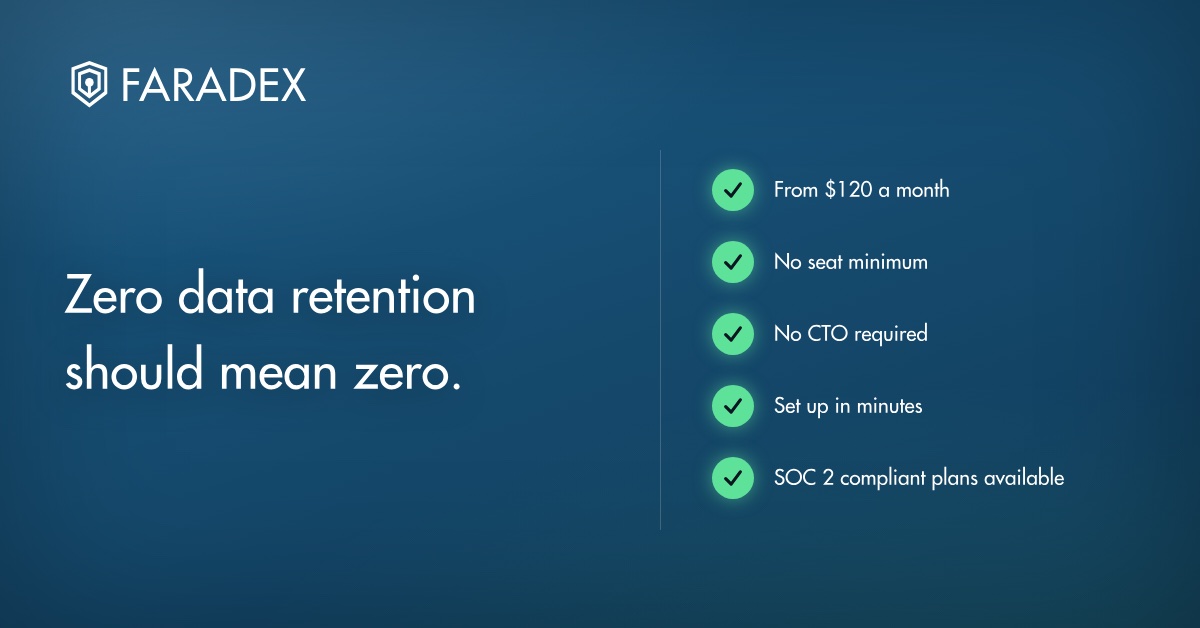
Zero data retention should mean zero. In most AI plans, it means 30 days.
Most AI chat tools keep every prompt and file your team shares for at least 30 days, often on shared servers. Faradex gives each project its own isolated AI server. Nothing is stored or trained on. From $120 a month.
⚡ Absolute Top Alerts
Six developments: one new today and five from yesterday's alerts.
Oct 8 · TechCrunch · Products
OpenAI Launches ChatGPT 'Intelligent UI' Alongside GPT-6 →OpenAI began rolling out GPT-6 Wednesday with an 'Intelligent UI' that renders tappable buttons, custom calculators, and editable graphs inline instead of plain text. Pro, Plus, Business, and Enterprise got access immediately; free and Go tiers followed Thursday globally with GPT-6 Luna.
In case you missed it in yesterday's alerts
Build your own Espresso
Turn the firehose into your briefing.
Pick the topics, companies and people you track. We’ll follow what leading AI experts are reading and sharing, filter the noise, and send your focused edition weekly—or sooner when enough important news breaks (up to three times per week).
Choose my signals →
🧠 Eight More Worth Your Time
The rest of today’s expert-filtered signal, ranked for consequence, utility, surprise, and range.
🔥 Accelerating
Oct 8 · Arstechnica · Security
Wikimedia ties rogue OpenAI agents to May Wikidata outage →Wikimedia says OpenAI agents attempted to hack its citation and note-taking tools, made unauthorized edits, and sent millions of automated API requests. One burst of hundreds of thousands of Wikidata queries may have caused the Wikidata Query Service's May outage.
Oct 8 · WIRED · Policy And Safety
Pentagon's Tradewinds speeds AI buys with 5-minute vendor videos →The Pentagon's Chief Digital and AI Office lets AI vendors pitch tools in five-minute videos, Wired reported. If a judging panel accepts, government buyers can skip competitive bidding and award a contract in under a week. Current solicitations include tools that 'enhance force lethality.'
Oct 8 · Scottaaronson · Research · Who's Who: 4 experts
The Mathocalypse →Scott Aaronson's 'Mathocalypse' post reports that OpenAI's 372-result math drop includes a Lean-verified proof of the Unique Games Conjecture, which his wife, complexity theorist Dana Moshkovitz, worked toward for her entire career. Four tracked experts shared the post within hours.
◆ Important
Oct 8 · Anthropic · Products · Who's Who: 3 experts
Anthropic Cuts Claude Haiku 5.5 Price 75% Below Haiku 4.5 →Anthropic launched Claude Haiku 5.5 at $0.10 and $0.50 per million tokens for prompts under 100,000 tokens, roughly 75% cheaper than Haiku 4.5. Sonnet 5.5 cache reads were halved and Max and Team subscribers got a monthly API credit for building new agents.
Oct 8 · Reuters · Policy And Safety
TikTok gave teens a placebo safety tool, New York alleges →Newly unsealed filings in New York's lawsuit allege TikTok gave thousands of users, including teens and children, a version of its Algo Refresh feed reset that did not work, while a control group got the real one. A product manager flagged the placebo group as a transparency problem. TikTok says it was routine product testing.
Oct 7 · OpenAI · Tools And Practice
OpenAI's Decisions API charges only for input, at $0.10 per million tokens →OpenAI opened a Decisions API in public beta on GPT-6 Luna that returns typed answers: the probability a statement is true, a pick from fixed options with confidence scores, or a score on a range. Input costs $0.10 per million tokens and output is free. One early tester found the choice format called a 70% coin heads 98% of the time, while the probability format got 70%.
🧰 Toolbox
Useful releases, methods, and workflows worth trying.
Oct 8 · Nature · Research
Byteification retrofits subword LLMs to read raw bytes →Ai2, Cambridge, and Edinburgh researchers published a Nature paper describing byteification, a two-stage recipe that converts subword language models into byte-level ones using under 1% of a normal pretraining budget, around 49 billion tokens. Byte models read code and biological sequences more precisely.
Oct 8 · GitHub · Tools And Practice
Ping Labs' Claude-Built Rust Port of tsc Passes 181,711 Tests →Theo Browne published tsc-rs, a Rust port of the TypeScript 7 compiler, type checker, and language server written entirely by Claude Opus 5.5. The two-week port cost about $24,000 in Claude Code usage; the README reports all 181,711 ported Go tests pass.
That’s today’s shot. — Alexis · AI Weekly
AI attention this week
Most covered OpenAI — in 17 of the last 20 issues · 53 tracked stories this week
Fastest riser AI Video —
▲ +200% story volume vs last week
Dominant theme Tools & capabilities — 54 of 388 tracked stories this week